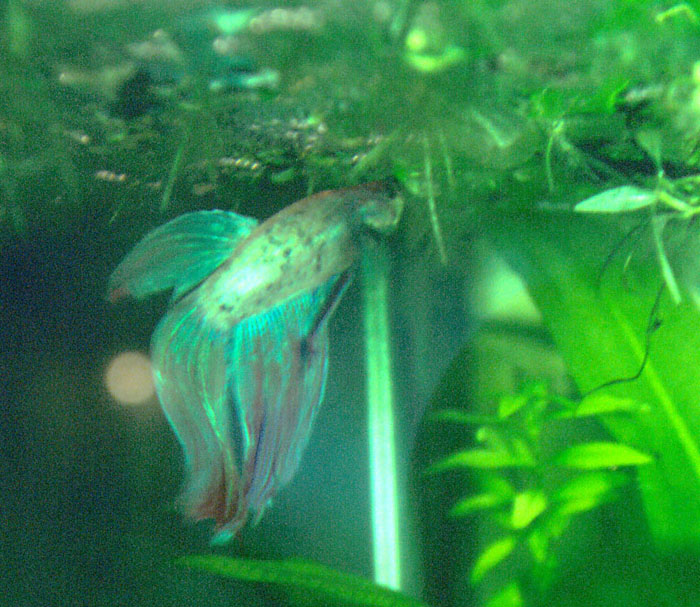
The water in the aquarium
Water parameters and quality
Temperature
Bettas thrive in warm water and quickly become ill if the temperature in the aquarium falls below 20 °C. They are also sensitive to fluctuations in temperature. All temperature changes should therefore be gradual. Keep this in mind when changing the water in your aquarium.
pH
The degree of acidity (pH value) should be approximately neutral. In Norway, we have neutral water in most places (approx. pH 7). It may still be good to acquire a test kit.
Hardness
The hardness of the water, i.e. its content of dissolved salts, affects which salts and waste substances are taken up and excreted through the gills and skin of the fish, and has an impact on the fish's metabolism and immune system. Bettas can withstand fairly hard water.
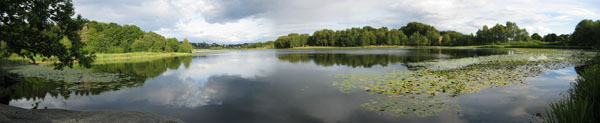
Image from Wikimedia Commons
Norwegian tap water
Many aquarium books in Norwegian bookshops have been written abroad and refer to tap water based on conditions on the European continent or in North America.
Norwegian tap water is unusual in being very clean (it has a low content of ammonia, nitrite and nitrate) and soft (it can be below 1 °GH). This of course varies from place to place; in many areas the water supplier adds lime or salts to increase the pH and hardness. This is done to reduce wear (corrosion) on the pipes.
Do not take anything for granted until you have tested the tap water. Feel free to buy a test kit and measure yourself, or call and ask your local waterworks. You can also take a water sample to your local fish shop and ask them to test it.
When you read in the aquarium book that you should leave the water in a tub for two or three days to air out the chlorine, this often applies to the water in large European cities, which they have to fill with chlorine to prevent people from getting sick from it. In Norway, it is rare for the waterworks to add so much chlorine that you need to aerate the water before putting it in the aquarium.
When you read in the aquarium book that a fish is difficult to keep because it requires soft water, the water in your tap may be perfect for this fish. As I said: Norwegian tap water is extremely soft, and it has a quality that the rest of the world can envy us.
Other Properties
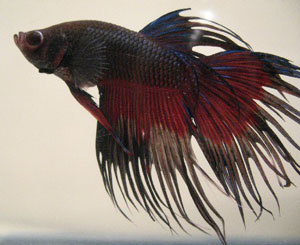
Image from Wikimedia Commons
Salt
Some recommend mixing in a teaspoon of salt per 10 liters of aquarium water for betta. I myself belong to those who prefer to alter the water chemistry as little as possible, and rather save the salt for medicine if the fish gets sick. Fresh water contains extremely little salt (below 0.05%), and although water can be hard in nature, it is salts other than sodium chloride that cause it. See also The Wikipedia article on salinity (wp) .
Bubble nest
The bubble nest is affected by water quality. If the water is too hard, it won't last. If you want large, sturdy bubble nests, the aquarium pH should be 7 or lower.
Oxygen
The oxygen level in the water is important for the fish's health. However, betta, like all labyrinth fish, have the ability to breathe air, so they manage in a pinch.
Water surface
The water surface in the aquarium should be clean, and the air above the water warm and moist. Otherwise, the betta can catch a "cold" when it takes in air. Bubble nests are also less stable in dry or cold air.
Stream
Bettas seem to enjoy swimming against the current occasionally, but it is more important that they have an area in the aquarium with calm water where they can rest against a plant or another surface. They need a very calm surface to build bubble nests.