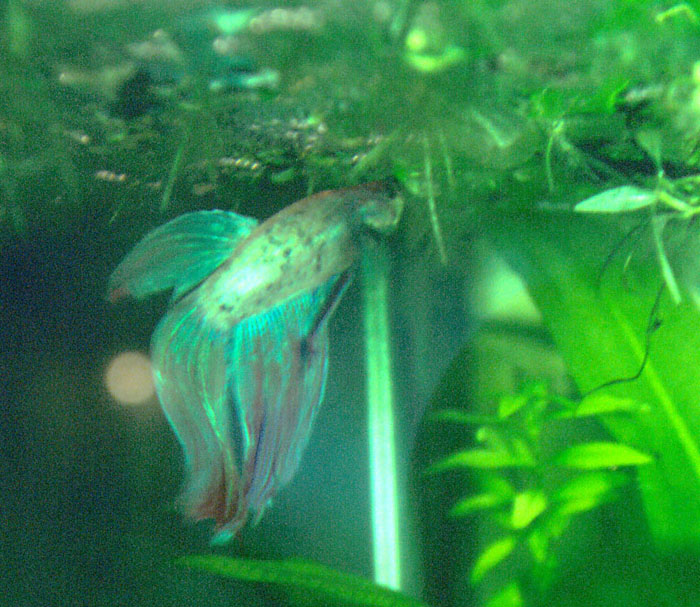
The aquarium
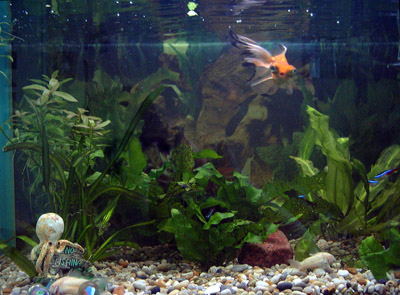
Picture from Wikimedia Commons
Aquarium
The aquarium itself—the rectangular glass tank—is one of the most important investments you make when starting this hobby. Perhaps this should be obvious, but it is often overlooked. Many people setting up their first aquarium spend more time thinking about fish, plants, electrical equipment and substrate than about the tank itself and where to put it.
Most of the equipment and furnishings can be easily replaced if it turns out not to fit. It requires greater effort to move or replace an aquarium that is initially full of water, fish and plants.
Size
The bigger the aquarium, the better. If you have one aquarium of 40 liters and one of 150 liters, you will soon see that the bigger one is easier to maintain and keep clean. (I kept my last betta in a 375-litre tank with a few other fish and plenty of plants, and he seemed to find it just the right size.)
The water parameters can become very unstable in small aquariums. This is stressful for fish, plants and the vital bacterial flora in the aquarium. Crises tend to develop more quickly as well. The story of the inexperienced aquarist who panics when he sees that there is something wrong with some of the fish, and makes the situation worse while trying to save them, is constantly heard in new variations.
Of course, a large aquarium can't save you from all rookie mistakes, but it can give you precious time to think things over or ask someone for help, in case things get out of balance in your aquarium.
For the beginner, it is therefore best to start with an aquarium of at least 80 liters (and preferably more), so as not to make it unnecessarily problematic to maintain an environment in which the fish can thrive. If bettas are the only fish you will have, a smaller aquarium may be more suitable, but you should ideally never go below 30 litres. Also remember that such a small aquarium is much less stable than a larger aquarium.
Many people have written in my guest book and asked why their betta has become ill. Some of these have had their betta in containers of less than 20 litres, which may also be part of the answer to your question.
Goldfish bowl
Goldfish bowls are an old design that may look good on the shelf, but are not as suitable for practical use. If you fill the bowl all the way up to give the fish as much water as possible to live in, the water surface becomes smaller. This means that there can easily be too little oxygen for the fish.
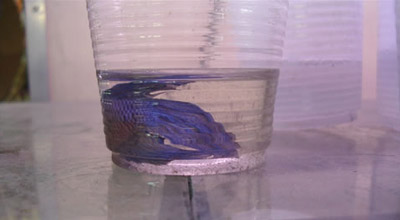
Picture from Wikimedia Commons
If you fill the bowl only halfway, the surface becomes larger, but the amount of water is also halved. This is a problem, given that most goldfish bowls are initially too small to be good homes for fish.
It is also difficult to see the fish properly when it is in a bowl, because the curved surface distorts the light.
Many people who keep a betta in a bowl complain that it is passive. It just sits there and never does anything. I don't think it's that strange. If you keep your betta like a vegetable, do not be surprised if it behaves like one. Of course, neither party finds this especially stimulating.
If, on the other hand, you give it more space, it will become more active, thrive and be more interesting to watch. You get more for your money, and the betta gets a better life.
When a small aquarium often costs less than a bowl, and when you take into account that algae is much more difficult to remove from a curved surface than from a straight one, it becomes difficult to see any good reason to choose a bowl over an aquarium. If you think the bowls look pretty, you can, for example, plant flowers in them.
If you insist on keeping your betta in a bowl, you must at least make sure that the bowl is in a place where the temperature never drops below 20 degrees Celsius. If the room can get colder, you must have a heater in the bowl, or replace the betta with a fish that can tolerate colder water (but not goldfish, it is one of the species that does not fit well in a bowl).
If you fill the bowl approximately two-thirds up, you achieve a compromise between the need for the most possible water and the need for the largest possible surface. You can make a lid out of, for example, plexiglass if you want the betta to be able to breathe warm and moist air.
Partial water changes should be carried out at least once a week. Check that the new water is at the correct temperature before putting it in the bowl; Bettas are sensitive to temperature fluctuations.
Frame or full glass?
Many prospective aquarium owners wonder whether framed or all-glass aquariums are best. It doesn't matter what you choose. Both types are equally well constructed. If it cracks, it cracks. In any case, you should have your water damage insurance in order. It is more affordable than you think.
Most people think all-glass aquariums are the prettiest to look at.
If you take care to set up the aquarium completely horizontally, and without twists in the substrate, it should go well. If you choose an all-glass aquarium, place a camping mat, polystyrene sheet, or similar material under the glass bottom to distribute the pressure better. Be careful to remove impurities from under the glass base before putting the aquarium in place.
Cover glass
Bettas require an aquarium with cover glass or a tightly fitting lid.
Glass covers are sheets of glass that lie above the aquarium and prevent the fish from jumping out. They also keep the air above the water warm and moist, perfect for betta.
Some aquariums have a tightly fitting lid without separate cover glass. As long as the lid stops the fish from jumping out and keeps the humidity in, you do not need an extra cover glass.
Breeding tubs
Many betta breeders have a house full of small two-litre containers, each holding a betta. With several hundred aggressive fish in the house, there is no point in providing "proper" aquarium space for all of them.
Before you start putting betta or fry in tiny containers, you should of course familiarize yourself well with the fish's needs, and you should also be prepared to change the water in all containers several times a week. This must be done every week for several months. Feel free to make a small estimate of the number of working hours before you start.