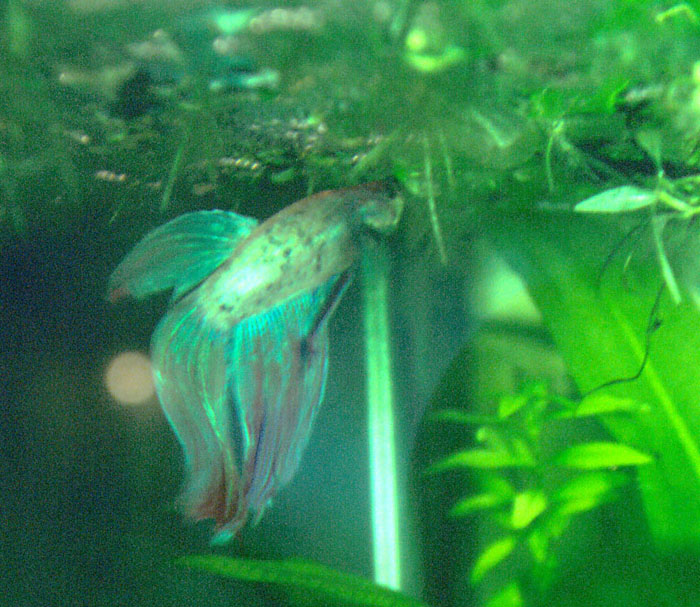
The fry aquarium
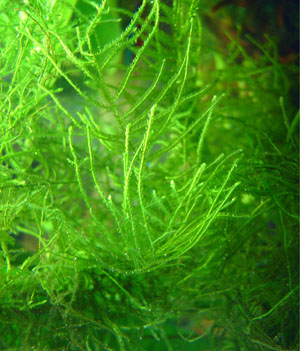
Picture from Wikimedia Commons
A fry aquarium usually needs a heater and thermometer.
Ideally, you should not have gravel in the bottom. Gravel makes it more difficult for the male to pick up eggs, and harder for you to clean the aquarium. If you feed with microworm or other sinking food, the gravel will prevent the fry from finding everything.
It can be good to have some floating plants or similar (not too many) that the fry can hide between.
Some aquarists instead use Java moss as a hiding place for the female betta and later for the fry. Java moss is also considered beneficial for the growth of infusoria.
Filter
When it comes to the filter, the first thing to think about is whether the fry can be sucked in. Many water-pump filters create so much suction that they are unsuitable for fry aquariums. An air-driven filter may be best. This requires a small compressor, a hose, an air stone and a filter housing. This should cost only €20-30.
In every case, the pump or airflow must be adjustable so that it does not damage the bubble nest or suck in fry. A nylon stocking or similar over the water intake can help. You can also buy aquarium filters with an open foam rubber sponge. These suck in water over such a large area that the suction power is unable to hold a squirming fry.
It is also possible to raise fry without a filter, but this requires much more frequent water change.
Water
You should use the same aquarium for spawning as you use for raising the fry. Fry do not particularly benefit from being moved (although many aquarists disagree with that claim). Do not feed the parents while they are in the spawning aquarium. They can go a few days without food and will spawn more readily without distractions. This also prevents the parents from contaminating the water for the fry.
After the eggs have been laid, one should not change the water until about a week after hatching. When you start changing the water, change only a little at a time and make changes more frequently. New water must be well aerated (to get rid of chlorine), and tempered so that the fry do not suffer temperature shock. Feel free to measure the water, both in the tap and in the fry aquarium.
When you suck out water with a siphon, you can easily siphon up fry hiding among debris on the bottom. Carefully return them to the fry aquarium with a plastic spoon or similar utensil.