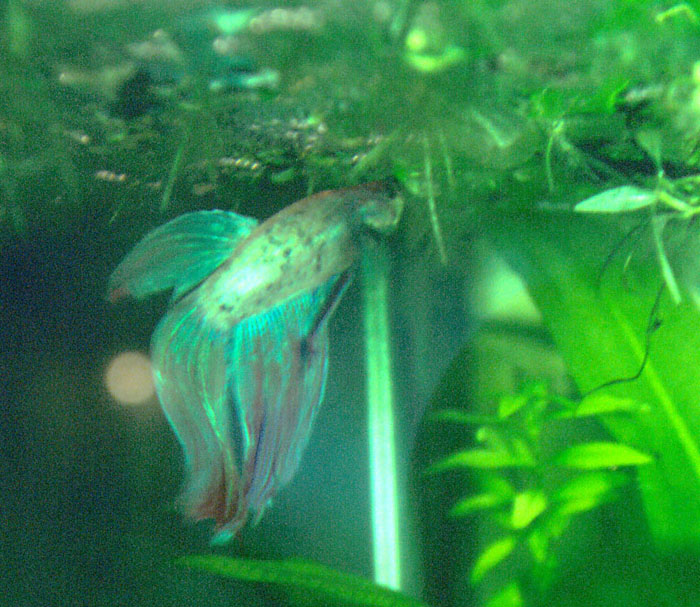
Fish compatibility
Picture from Wikimedia Commons
Choosing tank mates
Bettas tend to thrive together with “most” other aquarium fish, provided the other species are
- peaceful,
- not fin-nipping,
- not long-finned,
- not territorial, and
- not large enough to eat a betta.
It can often appear that if the other fish is not bothering the betta, the betta is bothering it instead. There are many exceptions. If you have doubts about putting two fish together, find someone to ask, search the Internet, or find other options.
Picture from Wikimedia Commons
Fish and other animals that usually do well with bettas
Here are some fish species that normally do well with bettas:
- Cardinal Tetra (wp) , black neon tetra (wp) , green neon tetra (wp) and regular neon tetra (wp) .
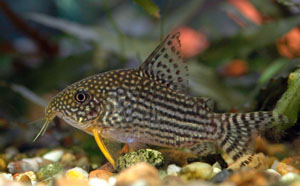
- Corydoras catfish (wp) , armoured catfish (wp) , kuhli loach (wp) and other peaceful bottom-dwelling fish.
- Zebra snails (wp) and other snails with short tentacles.
- Hatchetfish (wp) , but be aware that these stay very close to the surface, and can thus pose a threat to betta eggs and fry.
Fish and other animals that may live with bettas
Here are some fish that, with some luck, ingenuity or patience, may live successfully in the same aquarium as a betta. You should preferably not try to combine bettas with any of these species if you are unsure, or if you do not have other aquariums to move fish to if problems arise.
- Dwarf gourami (wp) and other peaceful gouramis that are considerably larger than the betta may coexist with bettas in aquariums that are not too small. The males can get a little argumentative at first, but the betta will normally come to respect the larger and, hopefully, calmer male gourami over time.
- Guppy (wp) and other veil-tailed fish. These can resemble betta in appearance. If the real betta is an aggressive one, this can provoke him.
- Platy (wp) , molly (wp) and swordtails (wp) . Some aquarists find that these fish nibble the betta’s fins, while others keep them successfully.
- Female betta. These are less aggressive than the males. They may still fail to live peacefully together. Combinations with one male and one or more females can work just fine. It can also work poorly, so that one or more fish are bitten or stressed to death. See below.
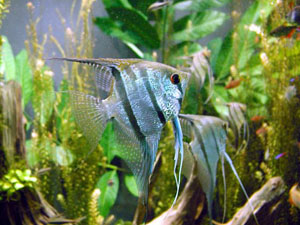
- Angelfish (wp) . The vast majority of angelfish do well with bettas, but there are at least two exceptions: Half-grown specimens can be fin-nippers, especially toward CT bettas with tempting “bait” all over them. There is also a risk that a fully grown angelfish can eat an adult betta.
- Apple snails (wp) do not bother the betta, but the betta can nip their tentacles off. The snails survive this, but probably prefer to keep all their body parts. They look much nicer with the tentacles intact anyway.
- Shrimp, although it may be safest to avoid, for example, freshwater prawns (wp) which can pose a danger to betta.

Picture from Wikimedia Commons
Fish that should not be put in the same aquarium as a betta
Here are some fish that you should be careful about keeping together with betta:
Male betta
Male betta must be kept separately. It is not possible to have two male betta freely in the same aquarium. They are going to kill each other; that is why they are called betta. Young males raised together are an exception, but when both start to become adults there is no telling what will happen, or when.
I have heard rumors that there are bettas that are "chemically castrated" with hormone treatment, so that several males can share the same tank. I myself don't quite see the point in changing the behavior of the fish just for the sake of convenience. If you want fish that behave like guppies, you can simply buy guppies.
Botia
My experience with having clown loach together with betta is that it can go well for several months. Suddenly the botias get a taste for veils, and then they eat his fins. Once they get a taste for betta, they don't forget it either.
I have no experience with other Botia species. I'm not going to take the chance either, because I know botias aren't that different in their diet.
However, female betta and plakats (short-finned bettas) can go well; firstly, they have much less "candy" on them and secondly, they are much faster to swim.
Cichlids
There are many species of cichlids that do not go well with bettas. The larger cichlids can devour a betta, while smaller cichlids may be irritated by it. I have seen both South American dwarf cichlids chase bettas and African cichlids fight with them, so I suspect that most territorial cichlid species can be problematic.
If you introduce dwarf cichlids into a tank with bettas, you should remove the bettas so that the cichlids have time to settle in before the bettas start bothering them.
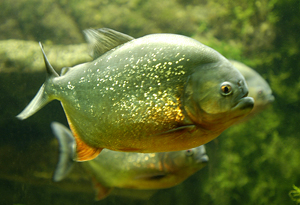
Image from Wikimedia Commons
Other fish
Reedfish (wp) are slow but voracious, and they can quickly make dinner out of a slightly too curious betta.
There are also many fish that like the taste of betta veils, or just bite anything that flutters. Examples: Clown loaches (wp) , lemon tetra (wp) , and other medium to large tetras/piranhas (of course), as well as carp-like fish such as harlequin rasbora (wp) and tiger barb (wp) .
Female betta
Some aquarists swear by keeping several females with one male. This distributes the male’s aggression among the females, so that none of them has to endure all the chasing alone.
But the females are also territorial, although they have smaller territories than the males. Space is therefore very important in such cases. To keep a male and females together, the aquarium should be at least 50 litres and well planted. Vegetation can separate the territories and help the bettas avoid seeing, and being irritated by, each other all the time. Nevertheless, it is not unusual for the females to establish a pecking order in which the weakest female is harassed by both the male and the other females.
The safest way to distribute the fish if you have several bettas is simply one betta in each aquarium, regardless of sex. Then you can be absolutely sure that they do not harm or stress each other. Bettas are very antisocial animals, and the nuclear family does not exist in their world.
If you are going to have an aquarium with only females, the number of females (the more the better) and the available space (the more the better) determine how much fighting and biting there will be. Since female betta also have very different personalities, one should have an additional aquarium to which you can move any bullies or victims of bullying.
Keeping a betta alone
Many people prefer to keep their betta completely alone. Bettas have no problem with solitude, but a betta in a small aquarium without anything moving can still become quite passive.
The solution is a richer, more varied environment—preferably a larger aquarium that the fish can explore. Adding other fish can also reduce the monotony, provided you find a suitable species.