Labyrinth fish
Picture from Wikimedia Commons
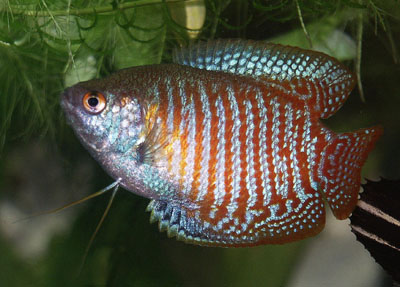
The Siamese fighting fish is a labyrinth fish. Labyrinth fish are actually four families of fish from Africa and Asia. The group is 50–60 million years old and includes gouramis, among other fish. The families are Anabantidae, Belontiidae, Helostomantidae and Osphronemidae.
The genus Betta belongs to the family Belontiidae. "Anabantids" is often used as a general term for labyrinth fish, and Anabantidae is often given as the betta family, although this is inaccurate. (The word Anabantodei, by the way, comes from the Greek word anabaiano, which means "to rise" or "to ascend". This is based on observations of labyrinth fish that rise to the surface to breathe air.)
Labyrinth
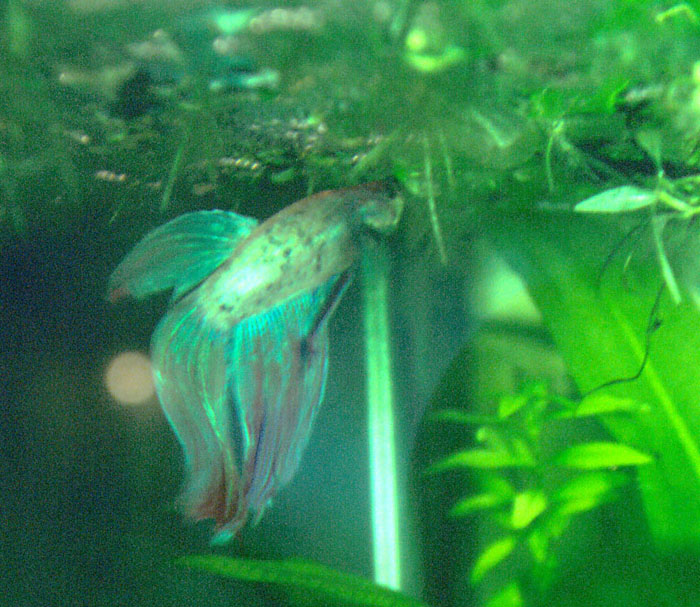
The reason the labyrinth fish got their name is that part of their gills has been converted into an organ that enables them to breathe air. This organ is called the labyrinth. If you lean over the aquarium and look down at a betta through the surface of the water, you can glimpse the labyrinth through the top of its head.
Labyrinth fish can therefore tolerate low oxygen levels in the aquarium, although they naturally thrive better in oxygen-rich water. If the air above the surface of the water is too dry or cold, or the surface of the water is dirty, labyrinth fish can contract infections ("colds") when they breathe air. If a labyrinth fish gets stuck underwater so it can't get air, it can drown.
Bubble nest
Some labyrinth fish are mouth brooders. They simply protect the eggs and newly hatched fry by storing them in their mouths until they are large enough to fend for themselves. This method is most common among the larger species, such as Betta pugnax.
Other labyrinth fish, on the other hand, use air for more than just breathing. They build bubble nests in which they shelter eggs and fry. The Siamese fighting fish is among these.
It is the male that builds and maintains the bubble nest, which serves as a hiding place and protection for the eggs and later for the newly hatched fry. The foam ensures that eggs and fry are supplied with oxygen, and contains fungicidal substances. A healthy male betta continually adds to its bubble nest as long as the conditions are right for it.
The nest is built under roots and between plants, often at the edge of land. In aquariums, the male often prefers to build the nest under the leaves of floating plants or other plants that lie in a calm place on the surface of the water. A half Styrofoam cup that lies upside down and floats in the aquarium is a sure winner.
The presence of a female often motivates the male to intensify construction. If the pH gets too high, however, it can become difficult for him, as the bubbles do not last as long.
In the first few days after hatching, the male catches the young when they try to swim away and spits them back into the nest. Eventually he loses interest and lets the fry sail their own seas.