Feeding
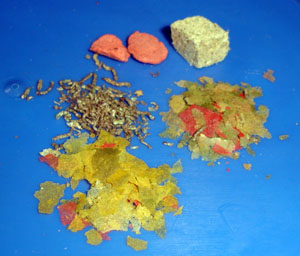
Image from Wikimedia Commons
Bettas
In nature, bettas eat mostly insects and other small animals found from a few centimetres below the surface to a few millimetres above it. In the aquarium, they eat whatever amount you give them. Fry naturally make their own demands on the feed.
Routines Generally about aquarium fish
Some good rules of thumb are to feed once or twice a day.
Do not release more feed into the aquarium than the fish can eat in 1-3 minutes. A healthy fish is always hungry, so there's no point in feeling sorry for it when it frantically swims towards the feeding area at the slightest glimpse of you. It just means that it has learned something.
It is important to vary the diet. One-sided feeding can lead to diseases, for example dropsy or swim bladder defect. Its immune system weakens, making the fish more susceptible to disease.
Feeding time is an excellent opportunity to observe the fish in the aquarium. You get to see the more shy specimens that usually hide, and you can study the fish to look for early signs of disease etc. If you are near the aquarium every time the fish eat, they also begin to associate their owner with food. It can help to see the fish more often.
Protein
When you need to condition a betta, help fry or damaged fins grow faster, temporarily boost the immune system, or prepare bettas to spawn, you can offer protein-rich food.
Some people use beef liver or beef as fish food. Many warn against using warm-blooded animals as a food source for fish. This is because mammals and birds can contain types of fat that cannot be broken down at low temperatures. Since fish are ectothermic and generally maintain a lower temperature than mammals and birds, these fatty substances can accumulate in the fish’s body and cause disease and damage to internal organs.
Frozen or live mosquito larvae are very good, but it is not wise to overdo these rich foods. Too much protein over a long period of time makes the fish fat and lazy, it weakens the immune system and contaminates the aquarium.
Overfeeding
Fish are ectothermic animals, which means that they do not use energy to keep warm. They float weightlessly in the water, so they don't have to use energy to stay upright either. Therefore, fish usually manage for a long time without food. Overfeeding kills many more aquarium fish than starvation does.
Holiday
Adult fish do well alone in the aquarium for a week or two without food. I would not recommend holiday food tablets. They pollute the aquarium without significantly helping the fish.
In periods when the supply of food is poor, the fish's metabolism is reduced. Their metabolism slows further if you lower the aquarium temperature a couple of degrees before you go away.
If you are going to be away for more than two weeks, you should consider getting someone to come and feed the fish, or investing about €20 in an automatic feeder from the pet store. While you are away, the fish should be fed sparingly, as you will not be able to change the water until you are back anyway.
Hunger strike
Bettas may stop eating and refuse to take food again until they are given frozen mosquito larvae or other easily digestible feed. Males are pickier than female bettas and may hold out until they receive some live food. It can help to let the betta fast for two or three days to see if it regains its appetite before taking more drastic measures.