Live food
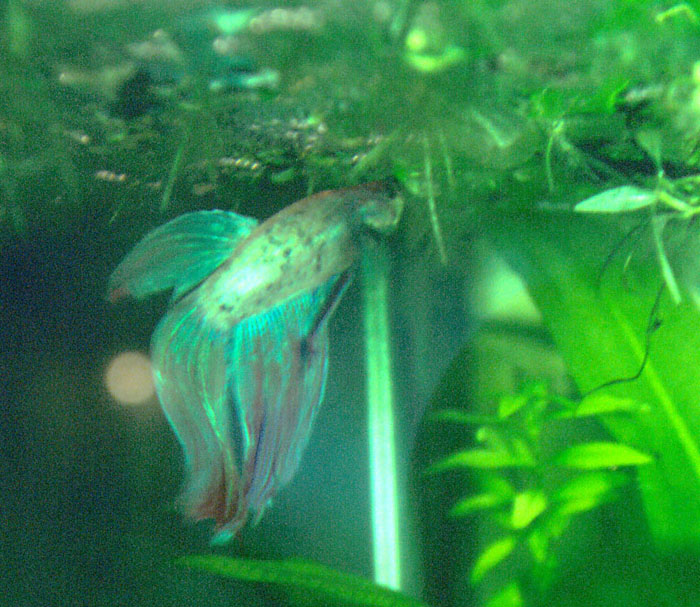
Live food is highly nutritious. For betta (and other predatory fish) it is a very important part of the diet.
If you want to raise fry in an aquarium, it is beneficial to familiarize yourself with this topic. If you try to raise the fry with dry food, they will grow more slowly and fewer will survive to adulthood.
Adult fish are less demanding about their diet and can go a long time on only dry food. Nevertheless, it is beneficial to vary the diet. Bettas that regularly receive mosquito larvae or other delicacies become more active, develop stronger colours and have more robust immune systems.
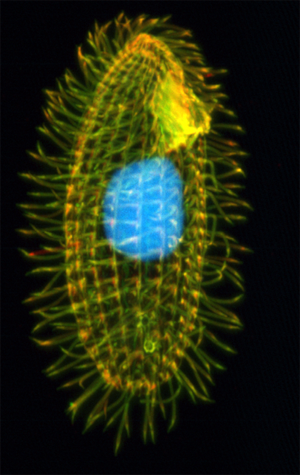
Image from Wikimedia Commons
Infusoria
Also called ciliates or infusoria.
These are tiny single-celled organisms that feed on bacteria. That is why you find them in all waters where something lies and rots. When the water in the aquarium becomes milky white or greyish, for example when the aquarium is new, it is often said that it is bacteria that make the aquarium water opaque. What you actually see are the infusoria that feed on the bacteria.
Infusoria are suitable food for newly hatched fry. The size is right, and the nutritional content is good. Infusoria do not pollute the water, as they stay alive until eaten.
In all planted aquariums there are already some infusoria. In aquariums with many plants, fry can survive on the infusoria that already live in the aquarium. If one filters too strongly, the infusoria are removed.
When you have to raise betta, you often use a stripped fry aquarium without plants. Then you need an infusoria culture that you can feed with.
- Wikipedia: ciliates (wp)
To start a culture
You don't need a starter culture. Fill a glass with 1-2 liters of tap water. The glass should have some sort of lid so that dust does not fall into the water. Drop a piece of raw potato (without skin) into the glass. You can also use a piece of banana peel that has been rinsed and then dried.
Place the glass in a dark place at room temperature or slightly warmer. Leave it there for a few days.
When the water has turned gray or whitish, it is due to infusoria. Remove the potato/banana peel. The culture is ready.
Now you can take out water and infusoria with a pipette (dropper) or a syringe, and drip into the aquarium for the fry.
Feed the infusoria with a few drops of skimmed milk a couple of times a week, and they will not die out. It may be a good idea to have two cultures at a time, which you start up a few days apart.
Microworm
Scientific name: Panagrellus redivivus, syn.: Panagrellus silusiae. English name: microworms.
Also called "microworm", "micromakk" or "micromakk". These are nematodes: small, white worms 0.5–2 mm long and about 0.05 mm thick. In nature, they are decomposers that live in soil.
Like bettas, they thrive and reproduce best between 25 and 28 degrees Celsius. Unlike the betta, they can survive freezing temperatures.
- Wikipedia (English) Panagrellus redivivus (wp)
To start a culture
To grow these you need a starter culture. Once you have something to start with, the rest is easy.
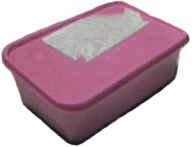
Find a suitable size container with a lid. I myself use a plastic box the size of a lunchbox.
Make a porridge of flour and water that covers the bottom of the box. You can use any type of flour or cereal (without fruit, sugar and the like). I prefer a mixture of oat bran and wheat flour. The microworm is very fond of wheat flour, and oat bran makes the mixture less dense.
Feel free to poke two or three holes in the lid. If the housefly is tempted to lay eggs in these, you get some maggots as a bonus. You can give these to the larger fish in the aquarium.
Add the starter culture to the porridge, and sprinkle a couple of small pinches of dry yeast over the whole thing. The microworm spreads quickly. Within 1-7 days (depending on temperature, humidity, etc.) they should have spread throughout the entire box. Store the culture at room temperature. 25 degrees Celsius is ideal.
When the microworms thrive, they crawl up the walls of the box. Scrape off the escapees with a finger, and stick the finger in the aquarium water. The micro-worms sink downwards. If they get time to hide away in the gravel, only the benthic animals get to enjoy them. It can therefore be an advantage to have a bare glass bottom in the aquarium when working with fry.
Microworms can survive for more than 24 hours in aquarium water.
If the culture thrives, the porridge will eventually become more fluid. Then you have to top up with more flour.
Sprinkle 1-3 pinches of dry yeast over the culture 1-3 times a week, depending on how intense the production of microworms you want.
Production can suddenly drop drastically. It may therefore be wise to have two cultures running at a time, started a couple of weeks apart. After 4-6 weeks the culture starts to smell and you should start with a new one.
Artemia
English: brine shrimp
This is a slightly more demanding live food, used mainly by dedicated breeders. You can buy unhatched brine shrimp eggs, with or without shells, from a pet shop. To cultivate these, you have to mix salt water in the right ratio and set up a container of two to three litres with an air stone under a light source.
To start a culture
You need:
- A container, e.g. a small box or a glass jar.
- Artemia eggs.
- An air pump and an air stone.
- A salinity meter. Several types are available at aquarium shops. Artemia is not very demanding, so you can safely buy the cheapest one.
- A powerful little light source, e.g. a desk lamp.
- Aquarium salt.
- A syringe.
Artemia thrives best with a salinity of between 6 and 10 percent, so mix room temperature water and aquarium salt until the salinity meter shows around 8%. Add a pinch or two of Artemia eggs, and place the air stone at the bottom of the container to create some circulation.
Keep an eye on the temperature. The optimum temperature is around 28 °C, then most of the eggs hatch within 24 hours. If the temperature is as low as 21 °C, hatching can take one and a half times as long. If the temperature goes above 30 °C, some of the Artemia can start to die.
The eggs lie on the bottom after you add them and remain there until they hatch. After hatching, the Artemia swim towards the light near the surface and gather in a small shoal. The eggshells remain on the bottom, or float around in the middle of the water surface.
Then just put the syringe against the edge of the container and suck up the live brine shrimp. Now you can give them directly to the betta fry. If you want as little salt as possible in the fry aquarium, you can squirt them into a coffee filter to rinse away the salt water before you suck them up in the syringe again and give them to the fry.
Add new eggs as the old ones hatch. When the bottom of the container starts to get "dirty" with old eggshells, it's time to empty the entire container and start over. As with most cultures, it can pay to have two or more running in parallel. Not only does this ensure a more even supply of fry feed, it can also save you if one of the cultures should crash at an inconvenient time.
- Wikipedia (English): Brine shrimp (wp)
.jpg)
Picture from Wikimedia Commons
Fruit flies
Scientific name: Drosophila melanogaster
These are very nutritious and supposedly easy to grow, provided you can obtain a starter culture. Due to their size, they are suitable as feed for adult fish. There is a variant with crippled wings, so that you don't have to get the house full of flies. I have no experience with fruit flies myself, so you won't find a recipe for them here.
- Wikipedia: banana fly (wp)
Vinegar eels
Scientific name: Turbatrix aceti, syn.: Anguillula aceti
Live feed which is supposedly easy to grow if you have a starter culture. Suitable for fry. I won't write more about this feed, you can read more about it at
- Wikipedia (English): Turbatrix aceti (wp)
Daphnia
Also called "daphnia" or "Daphnia". Water fleas, which have been cultivated as live feed among aquarists for many years.
- Wikipedia: daphnia (wp)
Moina
Moina is an Asian Daphnia which has become popular in recent years.
Rotifers
Rotifers have entered the aquarium industry recently, and are used as a more nutritious substitute for infusoria. The disadvantage is that you need a starter culture.
- Wikipedia: rotifers (wp)
Insects
Mosquitoes and small flies can be a welcome change in the menu of carnivorous fish. Live insects are of course preferred. It is true that certain fish can be persuaded to take dead or unconscious specimens, but they must be fresh. So if you are a passionate mosquito hunter, you can successfully combine the aquarium hobby with this.
See also self-pick further down.
- Wikipedia: insects (wp)
Mosquito larvae
Mosquito larvae can be bought live, frozen or dried at the aquarium shop. Three types of mosquito larvae are common: black, red and white.
If you buy live mosquito larvae, you have to make sure that all of them are really alive. If any lie dead and covered in fungus, the fungus can spread to the betta, and you quickly have a small fish-keeping tragedy on your hands.
Some people "grow" mosquito larvae themselves, by setting out a bucket of water on the veranda during the summer months. A lot of strange things can probably start living in there, but I would neither recommend nor advise against this method, and have no idea about any risk of infection (see section below). I have tried with a 10-litre bucket of water, but this did not attract anything alive. Maybe the water was not nutritious enough, maybe ten litres is simply too little, or maybe my veranda was a little too far from the bush (third floor of a block). (Note to self: Time to try again.)
- Wikipedia: mosquitoes (wp)
Warning about red mosquito larvae
The red mosquito larvae cause allergies in humans, due to some hemoglobin substances (erythrocurorin) that they contain. Therefore, wear gloves, or at least wash your hands thoroughly after handling them. Avoid putting your hands in the aquarium for the first few hours after you have fed red mosquito larvae.
Also, be careful not to inhale dust from freeze-dried red mosquito larvae, and do not use an air pump in aquariums that have been fed with red mosquito larvae. Keep them out of the reach of children and do not let children handle them. If frozen red mosquito larvae are kept too close to frozen food, allergic reactions to the frozen food can occur.
Self-pick
In summer, you can find many strange creatures in the surrounding water and streams. It can be tempting to collect some food for your fish. It is good to keep in mind that you cannot know which microorganisms or parasites may come with it, or how they will affect fish and aquariums.
If you pick up e.g. feed from a river that contains the salmon parasite Gyrodactilus salaris, there is a risk that the fish in the aquarium will become infected with this. Norwegian nature is full of ciliates, bacteria, molluscs, viruses and insect parasites that may (or may not) attack your fish. Also watch out for dragonfly larvae, they are greedy predators that will eat your fish if your fish don't eat them first.
Having said that, backswimmers (wp) and many other fairly large aquatic insects are very popular with slightly larger predatory fish such as angelfish.